Khajuraho Travel Guide:
Temples, History, Festival, Stay & Food
Khajuraho, in the Chhatarpur district of Madhya Pradesh, is one of India's most remarkable heritage destinations. Its temples were built more than a thousand years ago and are known for their stone architecture and detailed sculpture. This guide covers the history, the three temple groups, the museums, the Dance Festival, and practical tips on where to stay, eat, shop and get around.
On this page
Why Visit Khajuraho?
The name comes from the ancient term khajur-vahaka, a reference to the date palm (khajur) trees that once surrounded the settlement. The temples were built between the 9th and 12th centuries CE under the Chandela dynasty and were later forgotten under dense forest. They were rediscovered in 1838 by Captain T.S. Burt, a British officer guided by local villagers.
In 1986, UNESCO declared the Khajuraho Group of Monuments a World Heritage Site. The Chandela rulers built 85 temples here, and 25 survive today.
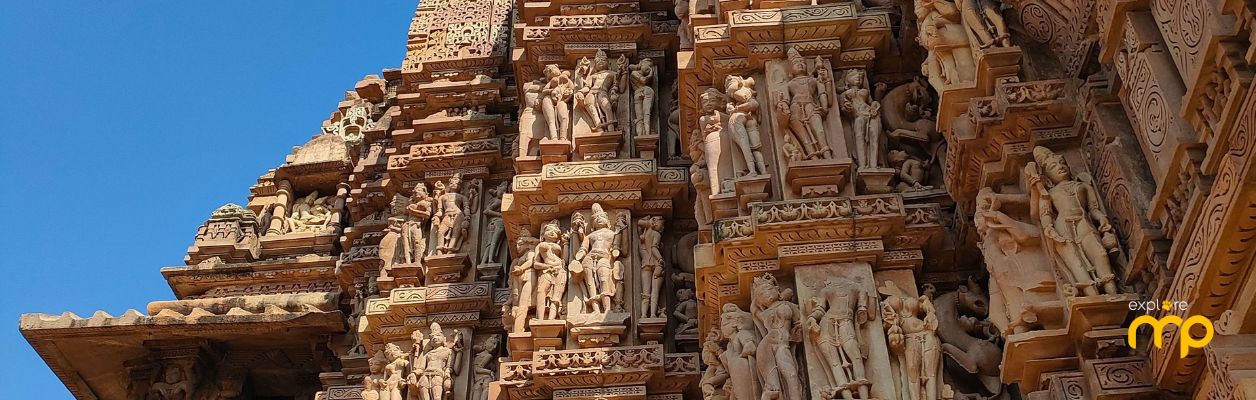
The temples use precisely jointed sandstone blocks, and the structure has withstood more than a thousand years of weather.
A Brief History: The Chandela Dynasty
The Chandelas were a Rajput lineage who ruled the Jejakabhukti region of central India between the 9th and 13th centuries CE. They began as feudatories of the Pratiharas and grew into one of central India's most resilient kingdoms.
- Yashovarman (c. 925–950 CE): built the Lakshmana Temple.
- Dhanga (c. 950–1002 CE): expanded the kingdom and patronised masterpieces such as the Vishvanatha and Parsvanatha temples.
- Vidyadhara (c. 1017–1029 CE): regarded as the most powerful Chandela ruler. The Kandariya Mahadeva Temple is often attributed to his reign.
Travellers such as Al-Biruni (11th century) and Ibn Battuta (14th century) described Khajuraho as a thriving town with a large lake and magnificent temples.
Architecture: What Makes the Temples Special
The temples follow the Nagara style, with curving shikharas (spires) rising above high platforms. Most share a plan of an inner sanctum (garbhagriha), a vestibule, pillared halls and a porch. Most face east, so the first light of dawn falls on their facades.
The walls carry sculptures of deities, musicians, dancers, animals and scenes of daily life. Only a small percentage of the sculptures are erotic. They are part of a larger celebration of life, reflecting the idea that desire is one stage of life that sublimates into devotion and liberation.
Sculpture and architecture are inseparable here: every wall tells a story in stone.
Khajuraho Temples by Group
The temples are divided into three clusters: Western, Eastern and Southern.
| Group | Character | Highlights |
|---|---|---|
| Western | Largest and best preserved | Kandariya Mahadeva, Lakshmana, Vishvanatha |
| Eastern | Smaller, more restrained; Hindu and Jain shrines | Parsvanath, Adinath, Ghantai, Vamana, Javari |
| Southern | Smallest, in open countryside | Duladeo, Chaturbhuja (Jatkari) |
Western Group of Temples (the main attraction)
This is the largest and best-preserved cluster, with 12 temples and shrines near the Sib Sagar tank.
Kandariya Mahadeva Temple
- Built around 1030 AD and rising 30.5 metres, it is the tallest and most accomplished temple at Khajuraho.
- It is dedicated to Shiva and houses a polished marble linga.
- Its exterior walls display nearly 900 sculpted figures in three bands.
- Clusters of miniature spires around the main tower resemble a mountain range.
Lakshmana Temple
- One of the finest and best-preserved temples here, dedicated to Vishnu.
- It stands on a high platform with four subsidiary shrines intact at the corners.
- An inscription dated 953–954 CE records that King Yashovarman built it.
Vishvanatha Temple
- Built around 1002 AD under King Dhanga and dedicated to Shiva.
- It is known for graceful apsaras carved in natural poses.
- A separate pavilion in front holds a large monolithic Nandi.
Other Western Group highlights
- Chitragupta Temple: dedicated to Surya, the Sun God, with a rare eleven-headed Vishnu image.
- Devi Jagadambi Temple: popularly called the Kali Temple but originally dedicated to Vishnu.
- Matangeshvara Temple: the only temple at Khajuraho still in active worship, with an 8 ft 4 in polished Shiva linga.
- Varaha Temple: a simple shrine holding a monolithic boar incarnation of Vishnu carved with 674 figures.
- Mahadeva, Nandi, Parvati and Lalguan Mahadev temples: smaller shrines worth a short stop.
- Chausath Yogini Temple (c. 875 CE): the oldest surviving monument at Khajuraho, built of granite and unlike the sandstone temples.
Eastern Group of Temples
These smaller temples are more restrained in sculpture. The Eastern Group includes both Hindu and Jain shrines, showing the pluralistic character of the site.
- Parsvanath Temple: the finest Jain temple here, known for sculptures of celestial maidens in everyday moments.
- Adinath Temple: a small Jain shrine with three bands of sculpture.
- Ghantai Temple: named for its carved chain-and-bell pillars.
- Shantinath Temple: a modern Jain temple with a 14 ft Tirthankara image.
- Vamana, Javari and Brahma temples: the Hindu shrines of the group. Despite its name, the Brahma Temple is a Shaiva shrine.
Southern Group of Temples
The smallest group has two temples set in open countryside:
- Duladeo Temple: a Shiva temple from the last phase of Chandela building, noted for its carved bracket figures.
- Chaturbhuja (Jatkari) Temple: a west-facing Vishnu temple with a 10 ft four-armed image and no erotic sculptures.
Bijamandala Temple
A significant recent archaeological discovery, where excavation has revealed the remains of a large temple complex.
Museums in Khajuraho
- Archaeological Museum: five galleries of Chandela-period sculpture, including Vaikuntha Vishnu, Sadasiva, apsaras and Jain figures. The sculptures are at eye level, so you can study details that are hard to see on the temples.
- Aadivart (State Museum of Tribal and Folk Arts): explores the Gond, Bhil, Baiga, Bharia, Korku, Kol and Sahariya communities through houses, paintings, ritual objects and an open cultural village. It also features the work of Bhil artist Bhuri Bai.
Khajuraho Dance Festival
The Khajuraho Dance Festival (Khajuraho Nritya Samaroh) was started in 1975 by the Government of Madhya Pradesh. It is held every February in the open-air precincts of the temple complex, with the illuminated temples as the backdrop.
- Dance styles: Kathak, Bharatanatyam, Odissi, Kuchipudi, Manipuri, Kathakali and Mohiniyattam.
- Beyond dance: craft exhibitions, an art mart, a film corner (Chal Chitra), art discussions (Kala Varta) and a food corner (Swad).
- Records: the 2024 golden jubilee edition set a Guinness World Record for the largest simultaneous Kathak performance, with 1,484 dancers.
Where to Stay in Khajuraho
Options range from luxury to budget and homestays:
- Luxury and boutique: The Lalit Temple View, Ramada Khajuraho, Bundela Resort.
- Mid-range and near the temples: Hotel Harmony, Syna Heritage Hotel, Hotel Chandela, MPT Payal.
- Budget: Zostel Khajuraho.
- Homestays and resorts: Shri Krishna Jungle Resort, Namaste Homestay, Tourist Village Khajuraho.
Browse and compare stays on our Khajuraho hotels page.
What to Eat
- Breakfast: poha with peanuts and coriander.
- Local dishes: Dal Bafla, plus Bundelkhandi dishes such as Korma, Khatta and Bhutte Ka Kees.
- Street food and drinks: Aloo Tikki Chaat, Bhel Puri, Dahi Puri and lassi.
- Sweets: Khaja and Gajak.
- Restaurants: Pinch of Salt, La Bella Italia and Raja Cafe, which has served visitors for around 35 years.
Shopping in Khajuraho
Look for handloom textiles, tribal art, sculptures, jewellery, Dhokra metal crafts and books on the temples. Places to try include the government handicrafts emporium (Mrignayani), Karan Jewellers & Handicraft, Kuber, Crafts Emporium, Shiv Handicraft Emporium, and the stalls near the temple complex.
How to Reach Khajuraho and Get Around
- By air: Khajuraho Airport has domestic connections and operates mainly in peak season and during the dance festival.
- By train: Khajuraho Railway Station.
- By road: well-maintained highways make a scenic road trip possible.
- Local travel: auto-rickshaws, taxis, segways, rented bicycles and travel agents. Local guides are available, many speaking languages such as English, French, Italian, Spanish and Russian.
Best Time to Visit Khajuraho
October to March is the best time, with pleasant winter weather. Visit in February if you want to catch the Dance Festival.
Travel Tips
- Book tickets online from the official Archaeological Survey of India website, and avoid unofficial ticket sellers. Tickets are valid for the day you book.
- Dress modestly and follow temple etiquette.
- Visit the Western Group early in the morning for softer light and fewer crowds.
- Allow time for the Eastern and Southern groups and the museums.
Emergency Numbers in Khajuraho
| Service | Number |
|---|---|
| Universal emergency response | 112 |
| Police | 100 |
| Ambulance | 108 |
| Fire | 101 |
| Women helpline | 1090 |
| Child helpline | 1098 |
| National highway emergency | 1033 |
Khajuraho pairs well with Orchha and the other stops in our Madhya Pradesh heritage tour guide. For the full state, see the best places to visit in Madhya Pradesh.
Frequently Asked Questions
Khajuraho is famous for its Chandela-era temples, built between the 9th and 12th centuries and recognised as a UNESCO World Heritage Site in 1986. They are known for their Nagara-style architecture and detailed sculpture.
The Chandela rulers built 85 temples at Khajuraho, of which 25 survive today across the Western, Eastern and Southern groups.
The Kandariya Mahadeva Temple is the tallest and most accomplished temple at Khajuraho, rising 30.5 metres.
No. Only a small percentage of the sculptures are erotic. Most depict deities, musicians, dancers and scenes of daily life.
The Khajuraho Dance Festival is held every year in February, in the open-air precincts of the temple complex.
Two days is comfortable: one for the Western Group and the museums, and one for the Eastern and Southern groups.
Yes. The Matangeshvara Temple is the only temple at Khajuraho in active worship.

Want help planning your Khajuraho trip?
Tell us how many days you have and we'll build the itinerary.
Latest Travel Guides & Stories
Explore our latest travel guides and stories covering Madhya Pradesh's wildlife reserves, heritage circuits, pilgrimage trails and city highlights, written to help you plan a confident and memorable journey.
Best Places to Visit in Madhya Pradesh: 25 Must-See Destinations
The 25 places that define a Madhya Pradesh trip, grouped by wildlife, heritage, pilgrimage, cities and offbeat stops.
Read Article
Madhya Pradesh Heritage Tour: Khajuraho, Orchha, Mandu & Gwalior
Four dynasties, four centuries - how to sequence a heritage circuit and what to look for at each stop.
Read Article
Orchha Travel Guide: Explore Madhya Pradesh's Historic Temples & Palaces
A working town built inside a heritage site - the palace complex, the Ram Raja Temple, and the riverside chhatris.
Read Article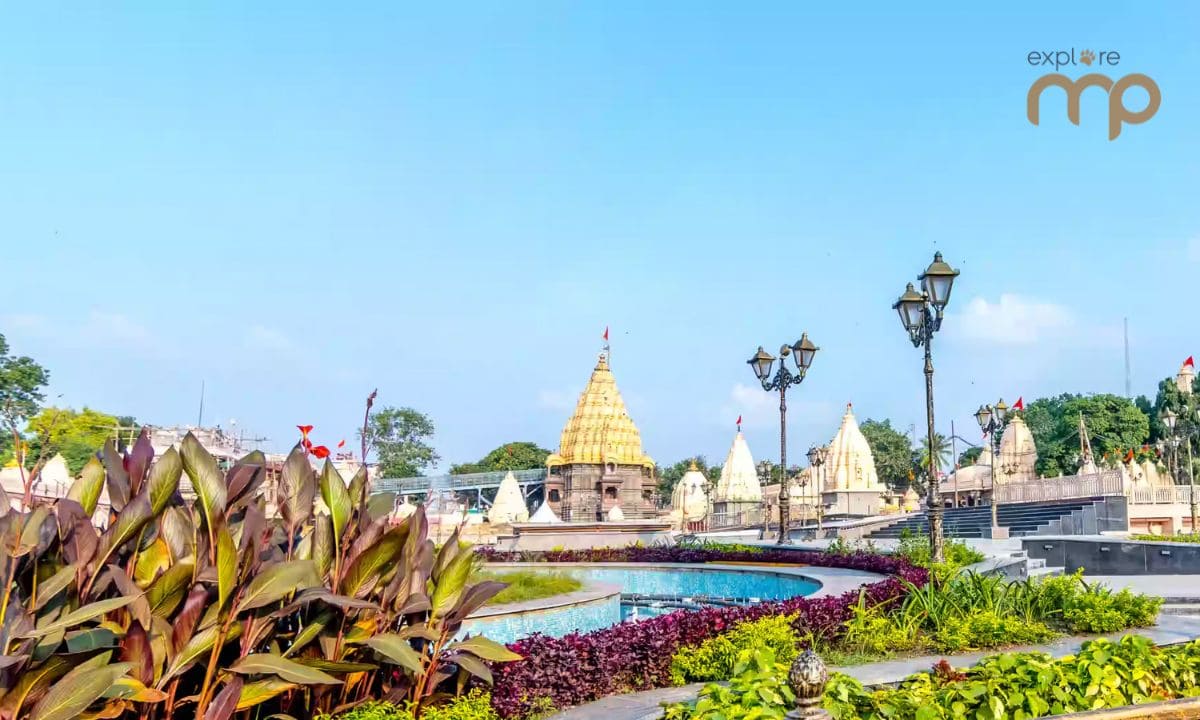
Madhya Pradesh Travel Guide: Best Places to Visit, Itineraries & Travel Tips
The four regional circuits - Bundelkhand, tiger reserves, Malwa and Central MP - and how to combine them into a single trip.
Read Article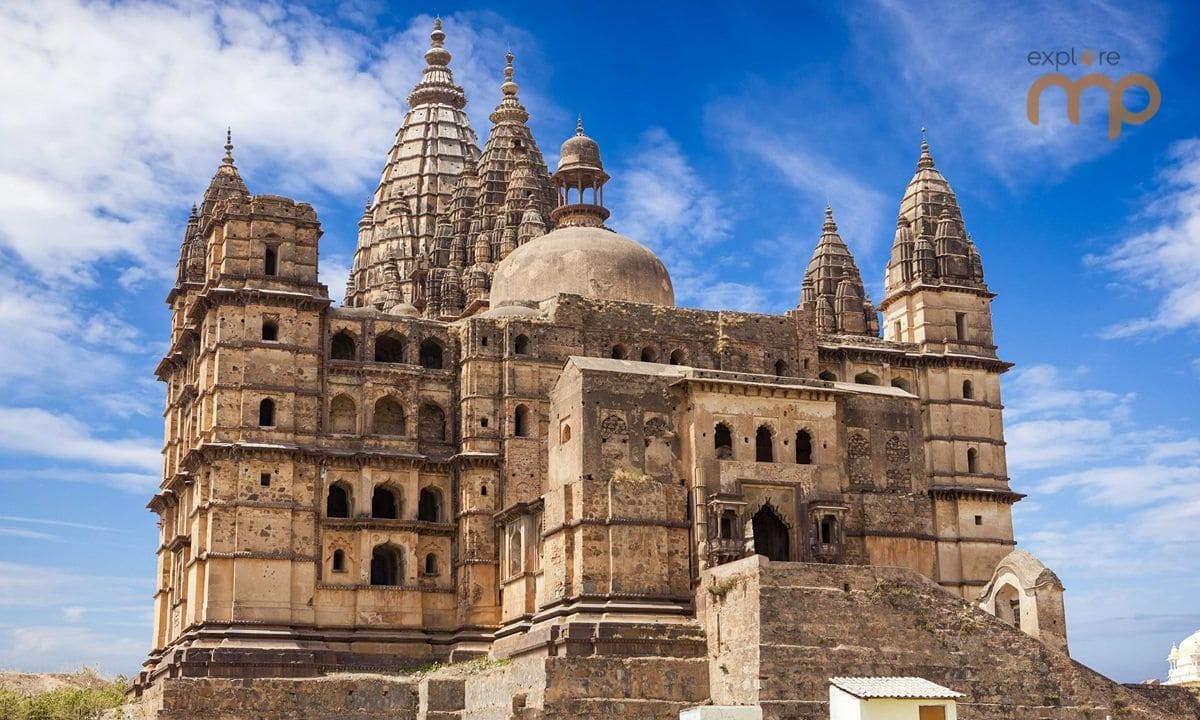
Madhya Pradesh Tourism: Complete Travel Guide for First-Time Visitors
Budgets, permits, transport, safety, accommodation and packing - the practical layer under any MP itinerary.
Read Article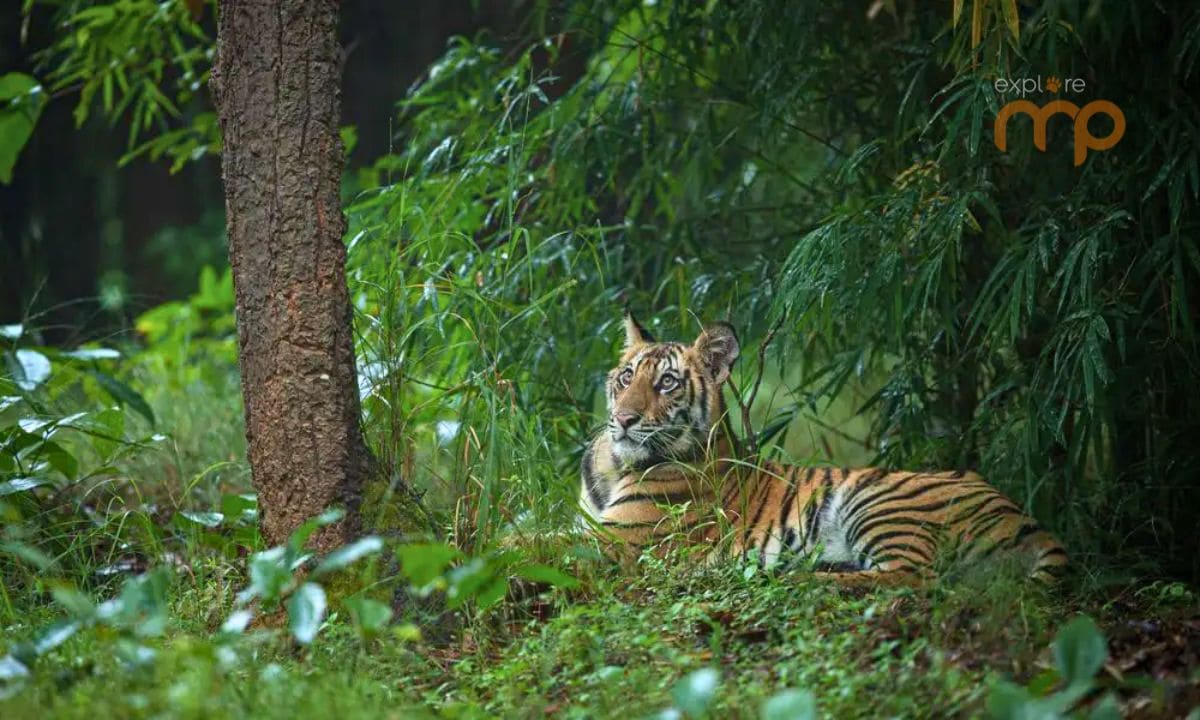
Tiger Safari in Kanha, Bandhavgarh & Pench: The Complete Guide
Best time to visit, zone-wise safari booking tips, and tiger-sighting odds across Madhya Pradesh's top three reserves.
Read ArticleView all blog articles for more in-depth guides on Madhya Pradesh's wildlife reserves, heritage circuits, pilgrimage trails and city highlights, written to help you plan with confidence.